

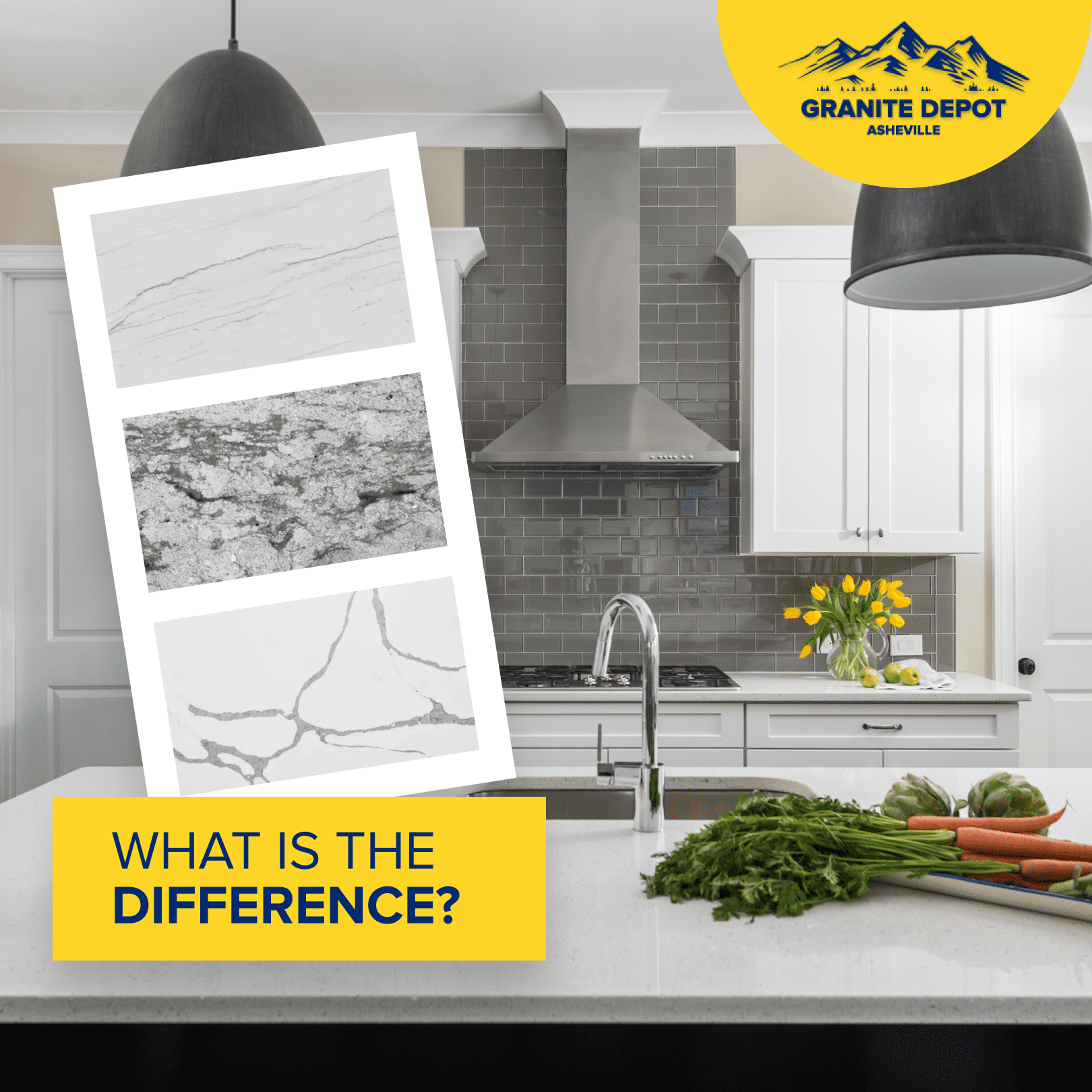
At Granite Depot, we often encounter the curiosity of homeowners intrigued by the distinct appearances of marble and quartz countertops. A common question arises: “Why are there patterns on marble but not on quartz?” The answer lies in their origins and composition, highlighting the beauty of natural and engineered stones in enhancing kitchen aesthetics.
Marble is a natural metamorphic rock formed under the intense heat and pressure of limestone re-crystallization. This process fosters the development of unique veins and swirls, making each marble slab a one-of-a-kind piece of earth’s artistry. The patterns in marble are essentially records of its mineral composition and the environmental conditions under which it formed, offering a glimpse into geological history right in your kitchen.
Quartz countertops, on the other hand, are engineered from natural quartz crystals combined with resins and pigments. This manufacturing process allows for a wide range of colors and patterns, including options that mimic the look of natural stone, but with a more uniform and consistent appearance. The lack of natural veining in quartz is due to its engineered nature, providing homeowners with the option for a more controlled aesthetic in their kitchen design.
When considering the kitchen granite price, it’s essential to appreciate the unique qualities that both marble and quartz bring to the table. Each offers distinct advantages, whether you’re drawn to the unparalleled elegance of natural patterns or the sleek uniformity and durability of engineered stone. Understanding the kitchen granite price alongside these differences ensures you make an informed decision that enhances the beauty and functionality of your kitchen.