


Granite Depot of Asheville quartz countertops have become one of the most popular choices for modern kitchens and bathrooms thanks to their durability, stylish appearance, and low-maintenance surface. Unlike many natural stone materials, quartz countertops are engineered to provide a non-porous finish that resists stains, moisture, and bacteria, making them ideal for busy households.
Even though quartz countertops are known for being durable and relatively easy to maintain, improper care can still damage the surface over time. Many homeowners accidentally use abrasive cleaners, harsh chemicals, or rough scrubbing pads that slowly dull the finish and reduce the countertop’s natural shine. Excessive heat exposure and improper daily habits can also weaken the resin that binds the quartz together.
The good news is that proper quartz cleaning does not require expensive products or complicated routines. With the right approach, homeowners can keep their countertops looking polished and beautiful for years. This guide explains safe and practical methods for regular cleaning, daily maintenance, and preventing long-term damage while preserving the elegance of your quartz surfaces.
How Often Should You Clean Quartz Countertops?
Keeping quartz countertops in excellent condition starts with consistency. While quartz is highly durable, regular care prevents buildup, discoloration, and surface dullness.
For everyday maintenance, homeowners should perform a quick wipe-down at least once per day. A soft cloth combined with warm water is usually enough to remove dust, crumbs, and light residue from food preparation. In busy kitchens, especially around cooking areas and sinks, daily cleaning helps maintain a clean and polished appearance.
A deeper cleaning is recommended once a week. This involves using mild dish soap and a microfiber cloth to remove grease, fingerprints, and light buildup that may not disappear during routine wiping. Weekly maintenance helps preserve the smooth finish and prevents sticky residue from accumulating over time.
Occasionally, quartz surfaces may require more attention. Signs that countertops need extra cleaning include:
- Visible residue or film buildup
- Sticky areas near cooking spaces
- Dull-looking sections
- Water spots or streaking
- Accumulated grease around sinks and stovetops
It is also important to clean spills immediately, especially coffee, wine, oils, or acidic liquids. Allowing spills to sit too long can affect the appearance of the surface and make cleaning more difficult later.
Consistent gentle care is one of the best ways to keep quartz countertops looking new without causing unnecessary wear or damage.

Why Quartz Countertops Need Special Care
Although quartz countertops are extremely durable, they still require proper maintenance to preserve their appearance. Quartz is an engineered material made from crushed natural quartz combined with resin binders and pigments. This manufacturing process creates a non-porous surface that resists stains better than many natural stone options.
However, the resin component inside quartz countertops can still be affected by improper cleaning methods. Many abrasive cleaners contain particles that scratch or dull the finish over time. Similarly, harsh chemicals and acidic cleaners may weaken the resin, leading to discoloration, fading, or permanent surface damage.
Unlike some natural stones that require sealing, quartz does not need extensive maintenance. Still, that does not mean every cleaning product is safe to use. Homeowners should avoid:
- Bleach-based products
- Oven cleaners
- Strong degreasers
- Abrasive pads or steel wool
- Solvents and paint removers
Quartz is also not fully heat resistant. Placing hot cookware directly on the surface may cause thermal shock or damage the resin layer. While quartz can tolerate moderate temperatures, direct exposure to heat should always be avoided.
Understanding these limitations helps homeowners protect their investment while maintaining the clean, modern appearance quartz is known for.
Daily Cleaning Routine for Quartz Countertops
A simple daily routine is the safest and most effective way to maintain quartz countertops.
Start by removing loose crumbs and debris from the surface. Use a soft microfiber cloth or sponge combined with warm water to wipe down the countertop. For areas with grease or light food residue, add a small amount of mild dish soap.
Focus on high-use zones such as:
- Around the sink
- Near the stove
- Food preparation areas
- Coffee stations
- Kitchen islands
When cleaning quartz countertops, avoid rough scrubbing pads or abrasive tools. Even though quartz is durable, aggressive scrubbing can slowly reduce the polished finish and create a dull appearance.
After cleaning, wipe the surface dry with a clean cloth or paper towels to help prevent streaks or water spots. Drying also helps maintain the natural shine of the countertop.
Homeowners should avoid spraying random household cleaners directly onto the surface unless they are specifically approved for quartz cleaning. Simple maintenance with gentle products is usually all that is needed to keep quartz surfaces clean and polished.
A few minutes of regular cleaning each day can significantly reduce buildup and extend the life of the countertop finish.
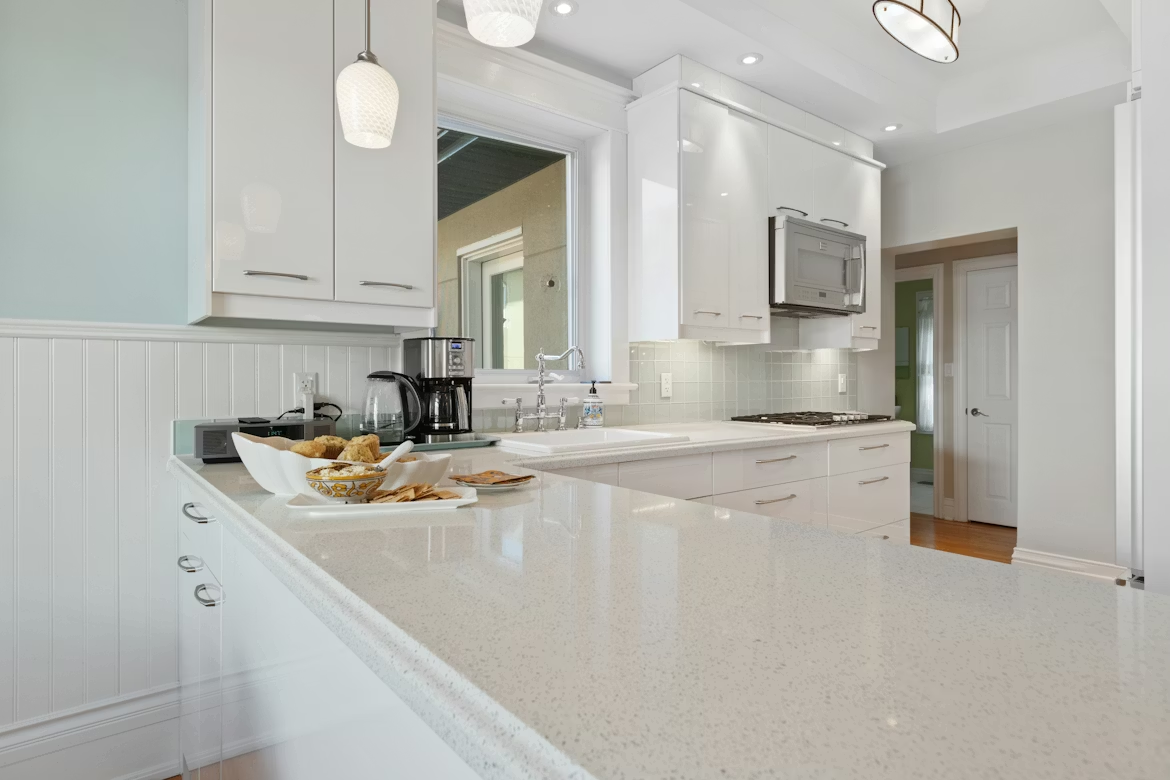
Tips to Prevent Damage to Quartz Countertops
Preventing damage is just as important as cleaning. Developing good daily habits helps maintain the beauty, durability, and longevity of quartz countertops.
Avoid Direct Heat
Even though quartz is durable, it is not completely heat resistant. Hot pans, baking trays, or slow cookers placed directly on the surface can damage the resin and cause discoloration or cracking. Always use trivets, hot pads, or protective mats under heated cookware.
Never Cut Directly on the Surface
Quartz countertops are scratch resistant but not scratch proof. Sharp knives can damage both the countertop and the blade itself. Always use cutting boards during food preparation to protect the surface from scratches and wear.
Clean Spills Quickly
Liquids such as wine, coffee, vinegar, lemon juice, and oils should never sit on quartz surfaces for extended periods. Prompt cleanup prevents residue buildup and reduces the risk of staining or surface dullness.
Avoid Harsh Products
Avoid using abrasive cleaners, acidic cleaners, or strong chemical products on quartz surfaces. Gentle dish soap and warm water are typically sufficient for everyday care.
Use Soft Cleaning Materials
Microfiber cloths and soft sponges are ideal for quartz cleaning. Rough brushes or abrasive pads can slowly wear down the polished finish and reduce shine over time.
Maintain Consistent Care Habits
Consistent maintenance is the key to preserving quartz countertops long-term. Gentle daily cleaning, immediate spill removal, and safe kitchen habits help maintain both appearance and durability for years.
Homeowners looking for stylish and durable quartz countertops can also explore the wide selection available from Granite Depot of Asheville. With many modern colors, patterns, and finishes available, quartz remains one of the best choices for kitchen and bathroom remodeling projects.