

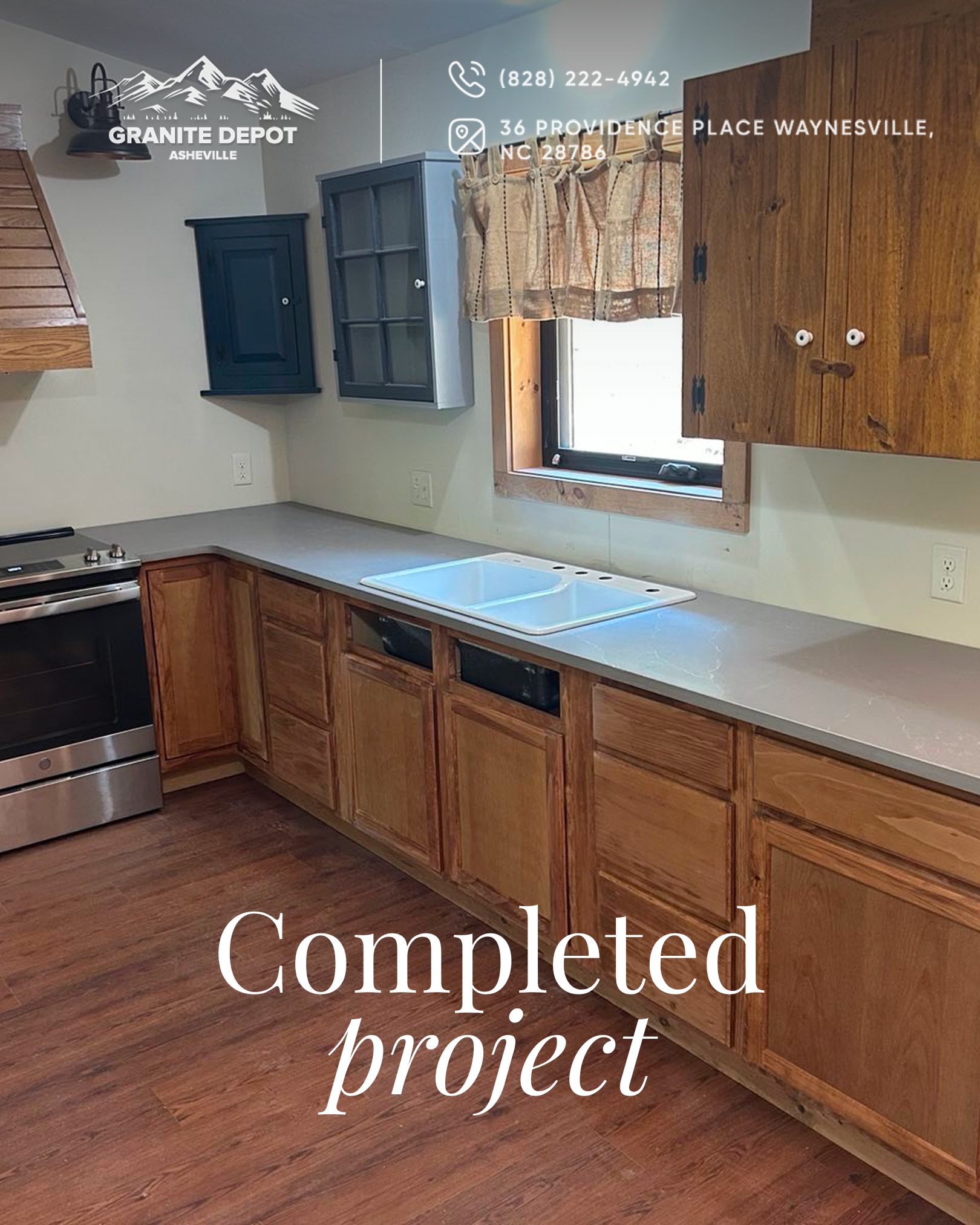
When it comes to choosing materials for your kitchen, granite is often a top contender. Known for its stunning appearance and impressive durability, granite has long been a favorite for kitchen countertops. However, one common question arises among homeowners: Can you place hot pots and pans directly on granite countertops? The short answer is yes, but with some important considerations.
In this article, we will dive deep into this topic, exploring the properties of granite, comparing it with other countertop materials, and providing practical advice for homeowners who are thinking about installing quartz kitchen countertops Fletcher, NC, or granite countertops in their kitchens. Let’s understand the science behind granite’s durability, its heat resistance, and what you can do to maintain your countertops in pristine condition.

The Basics of Granite Countertops
Granite is an igneous rock, formed by the cooling and crystallization of magma deep within the Earth. This process results in a dense, durable, and heat-resistant surface. When polished, granite countertops shine with a smooth, reflective surface that is highly sought after for kitchens and bathrooms.
Granite countertops are celebrated for their hardness, which makes them resistant to scratches and chips. In fact, granite is one of the hardest natural materials available for countertops, only being surpassed by diamonds, sapphires, and rubies. This unique property gives granite an edge in terms of durability, which is why it’s a common choice for high-traffic areas like the kitchen.
However, the main question that many homeowners ask is whether placing hot cookware, such as pots and pans, directly on granite can cause damage to the surface.
Heat Resistance of Granite
Granite is naturally resistant to heat, thanks to its mineral composition. The stone can withstand high temperatures, and it is typically able to handle the occasional hot pot or pan without sustaining damage. In fact, quartz kitchen countertops Fletcher, NC, and granite countertops share similar characteristics when it comes to heat resistance. Granite, being a natural stone, can generally resist temperatures of up to 1,200 degrees Fahrenheit (649°C). This means that typical kitchen cookware, including hot pans, pots, and baking trays, should not cause immediate harm when placed on the surface.
However, just because granite is heat-resistant, it doesn’t mean you should make a habit of placing extremely hot cookware directly on the countertop. While granite itself can handle the heat, prolonged exposure to high temperatures can affect the surrounding materials, including the sealer and the edges of the countertop. This can result in discoloration or a loss of shine.
How Granite Compares to Other Countertop Materials
While granite is heat-resistant, it’s essential to know how it compares to other materials commonly used for kitchen countertops, such as marble and quartz. Let’s compare granite with quartz to see how each handles heat.
Quartz Kitchen Countertops Fletcher, NC vs. Granite Countertops
-
Quartz Countertops:
Quartz is an engineered material, made by combining natural quartz crystals with resins and polymers. The result is a non-porous, durable surface that is resistant to scratches, stains, and heat. However, unlike granite, quartz is not as heat-resistant because the resins used in the manufacturing process can be sensitive to high temperatures.While most quartz countertops can withstand some degree of heat, placing a hot pot directly on a quartz surface can cause the resins to soften, potentially leading to damage like discoloration or deformation. Therefore, it is always recommended to use trivets or hot pads when working with hot cookware on quartz kitchen countertops Fletcher, NC.
-
Granite Countertops:
On the other hand, granite is much more heat-tolerant. It’s a natural stone, and while it’s generally safe to place hot pans on granite, it’s still important to avoid extreme temperature shocks. Rapid changes in temperature, such as placing a very hot pot directly onto a cold countertop, could lead to the formation of cracks over time. To keep your granite countertop looking its best, it’s advisable to use trivets or heat pads to distribute heat more evenly and to prevent any potential damage to the stone.
The Risks of Placing Hot Cookware on Granite Countertops
While granite is heat-resistant, there are a few risks to consider when placing hot items directly onto the surface. Here are the main risks involved:
-
Damage to the Sealer:
Most granite countertops are sealed with a protective coating that helps to prevent stains, scratches, and moisture from penetrating the stone. However, when you place a hot pot or pan directly onto the surface, it can potentially damage the sealer, especially if the cookware is extremely hot. This can result in discoloration or damage to the finish, leaving your granite countertop looking less pristine over time. -
Thermal Shock:
Although granite is heat-resistant, it is still susceptible to thermal shock, which occurs when a hot object is placed on a cold surface or vice versa. Rapid changes in temperature can cause the granite to crack or develop fissures, particularly near the edges or in corners where stress is concentrated. This is why it’s crucial to avoid placing very hot items directly onto the countertop without proper protection. -
Discoloration:
In some cases, repeated exposure to extreme heat can cause discoloration in granite countertops. This is especially true for countertops with lighter-colored granite or those with more porous characteristics. The heat can cause the stone to darken, leaving permanent marks.

Best Practices for Using Granite Countertops in the Kitchen
While granite countertops can handle some heat, it’s essential to practice proper care to maintain the appearance and integrity of the surface. Here are some best practices for homeowners with granite kitchen countertops:
-
Always Use Trivets or Hot Pads:
Even though granite can withstand heat, it’s still advisable to place hot pans, pots, and baking trays on trivets or hot pads. This will protect both the stone and the sealer, ensuring that your countertop stays in top condition. -
Avoid Placing Extremely Hot Objects on Edges or Corners:
The edges and corners of granite countertops are more susceptible to stress. Avoid placing very hot items directly on these areas to prevent the risk of cracking or damage. -
Regular Sealing and Maintenance:
To ensure your granite countertops maintain their durability and appearance, it’s important to have them sealed regularly. This will help protect the stone from heat, stains, and other potential issues. Granite surfaces should typically be resealed every 1 to 2 years, depending on the type of granite and how much use the countertop sees. -
Use Cutting Boards and Avoid Sharp Objects:
While this article focuses on heat resistance, it’s worth mentioning that using cutting boards and avoiding direct contact with sharp objects can also help preserve your granite countertops. Cutting directly on the stone can scratch the surface, which can affect both its appearance and its heat resistance.
Are Granite Countertops Heat Resistant Enough?
In conclusion, granite countertops are highly resistant to heat and can handle most kitchen tasks without sustaining damage. However, it’s always best to exercise caution when dealing with extremely hot items. Although granite can resist heat, you should still use trivets or hot pads to protect your quartz kitchen countertops Fletcher, NC, or granite surfaces from long-term damage caused by high temperatures.
Granite remains one of the most durable materials for kitchen countertops, offering both beauty and functionality. By taking care of your granite countertops, using proper protection for hot items, and investing in regular maintenance, your countertops will remain in excellent condition for years to come.
If you’re looking for high-quality quartz kitchen countertops Fletcher, NC, or granite countertops, consider working with an experienced supplier like Granite Depot of Asheville. With their expertise and wide selection of durable surfaces, you can ensure your kitchen is both functional and beautiful.